

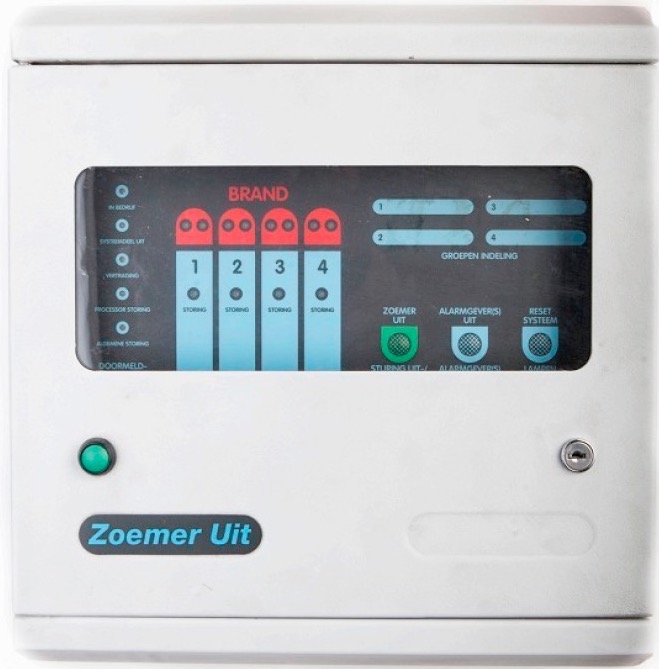
The reliability of a building’s fire alarm system depends on the number of false or unwanted alarms and faults it produces. These issues are often not caused by the fire alarm system’s technology itself, but by poor management and maintenance.
The NEN 2654-1 and NEN 2654-2 standards outline the requirements for proper management, control, and maintenance of fire alarm and evacuation systems, respectively. The NEN 2654 entrusts the related tasks and responsibilities to a designated Fire Alarm Control Panel Operator (Beheerder Brandmeldinstallatie, or BBMI).
The BBMI handles the day-to-day management and is the point of contact for all organizations involved with the fire alarm system’s function and the alarm response team. A BBMI contributes to the fire safety of a company or institution. Users of a fire alarm system that reports directly to the fire department are typically required to maintain the system according to NEN 2654-1. This means that at least one BBMI must be present within an organization. Due to the nature of a BBMI’s tasks and responsibilities, it is highly recommended to include them in the Emergency Response Organization (BHV).
Course Information BBMI ENG
| 1e day | 2e day |
| Walk-in 8:30 | Walk-in 8:30 |
| Start course 9:00 | Start course 9:00 |
| Purpose of Fire Alarm Systems | Indicators: Automatic Detectors |
| Management of Fire Alarm Systems | Fire Alarm Control Panel (FACP) |
| Maintenance of Fire Alarm Systems | Indicators: Manual Call Points |
| Logbook (System Archiving) | RAC & PAC |
| Laws and Regulations | FAS Control Panel |
| Practical Exercises BBMI Skill | BBMI Theory Exam |
| End first day 15:00/16:00 | End second day16:00 |
Training Inhoud

Training Includes
- 5 Hoofdstukken
- 62 Paragrafen
